Wood Floor Restoration
in Godalming, Guildford
& Nearby Towns
Bring tired, scratched or stained boards back to life for a fraction of the cost of replacing them. Dust-free sanding, a finish of your choice and one fixed price.
Restore What You Have
Before You Replace It
Most worn wood floors don't need replacing. Under the scratches, grey patches and old varnish there is usually good timber that can be sanded back, repaired and refinished to look as good as the day it was laid, sometimes better.
Our restoration service covers sanding, staining, lacquering and oiling, along with gap filling and repairs. We sand with our own machines and dust extraction, so the process is as close to dust-free as possible. Customers often tell us how clean the house was when we left.
We've restored everything from dining rooms and lower ground floors to solid oak parquet and a 125-year-old church floor. Whatever state your floor is in, Harry will tell you honestly whether restoration will give you the result you want.
Who this is for
- Original floorboards uncovered under old carpet
- Oak or parquet floors that have greyed, scratched or stained
- Homes being prepared for sale or a new chapter
- Floors with gaps, loose blocks or damaged boards
"Harry, Matt and Jake have done a great job laying an engineered oak plank floor. Very efficient, great communication and workmanship. Would definitely recommend."
What Happens If
a Worn Floor Is Left
Once the finish wears through, bare timber is exposed to dirt, spills and moisture. Damage that could be sanded out this year can go too deep to remove next year.
Stains soak deeper
Water, pet accidents and dark marks under rugs penetrate unprotected wood. Caught early they can often be sanded out; left, they may mean replacing boards or blocks.
Wear patterns spread
Traffic lanes through doorways and hallways turn grey and rough. The longer they go, the more timber has to be removed to level them.
Gaps let in draughts and dirt
Open gaps between boards collect dirt and let cold air rise through suspended floors.
Loose blocks and boards
Lifting parquet blocks and loose boards get worse with use and can damage the boards around them.
Common mistakes we see
- Hiring a sander without extraction and filling the house with dust
- Over-sanding with the wrong grit, leaving dips and chatter marks
- Assuming a stained floor must be replaced without getting it assessed
- Choosing a finish that doesn't suit how the room is used
How We Do It,
Step by Step
The same people from first visit to final walkthrough. Harry surveys, Sam runs the job.
- 01
Free assessment
Harry inspects the floor, checks board thickness and condition, identifies repairs and talks through finishes and colours with you.
- 02
Fixed-price quote
One fixed price covering repairs, sanding and finishing, so you know the full cost before we start.
- 03
Repairs and gap filling
Damaged boards are replaced, loose blocks re-fixed and gaps filled so the floor is sound before sanding.
- 04
Dust-free sanding
We sand in stages with our own extraction machines, taking off only as much timber as needed for a clean, level surface.
- 05
Staining and finishing
Stain if required, then your choice of oil or lacquer, applied in coats for an even, durable finish.
- 06
Final walkthrough
We walk the finished floor with you, check every edge and threshold, explain how to look after it and leave the room clean and ready to use.
What You Get
When It's Done Right
Far cheaper than replacing
Restoring keeps your existing timber, avoiding the cost of new boards and the disruption of lifting floors.
Keeps original character
Period boards and parquet have a patina new timber can't match. Restoration keeps it.
Clean process
Our own dust-extraction machines keep dust to an absolute minimum.
A finish that suits you
Natural, darker, lighter or matt. We'll show you options and recommend what will wear best.
Problems fixed, not hidden
Gaps, loose boards and damaged sections are repaired properly, not covered over.
Easier to look after
A fresh protective finish makes everyday cleaning simpler and guards against future damage.
Restoration Methods
and Finishes
No two restorations are the same. These are the main elements we combine depending on your floor's timber, age and condition.
Floor sanding
Sanding removes old finish, surface scratches and wear. We work through progressively finer abrasives so the surface is smooth and ready to take a finish evenly. Edges and corners are sanded separately so there's no visible border.
Staining
Stain changes the tone of the timber, whether you want to warm up a pale floor, tone down orange varnish or match boards to new joinery. We test colours on your floor before committing.
Oiling
Hardwax oils soak into the timber for a natural, matt look that's easy to spot-repair. Ideal for oak and for homes that like a more natural feel.
Lacquering
Lacquer forms a hard-wearing protective layer on the surface. It suits busy hallways and kitchens and is available in different sheen levels.
Gap filling
Gaps between boards can be filled to reduce draughts and give a cleaner look. The right method depends on gap width and how much the floor moves seasonally.
Parquet restoration
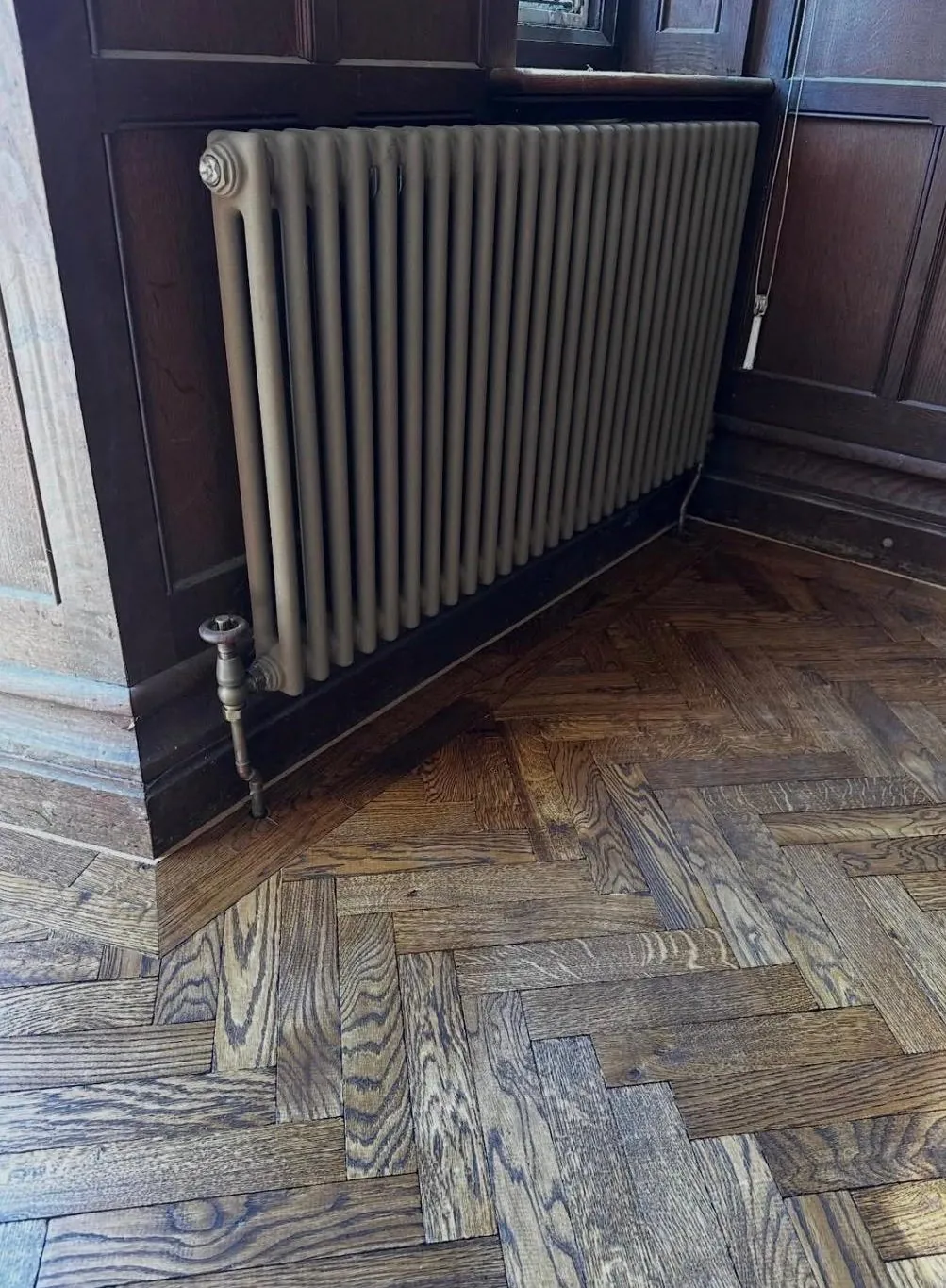
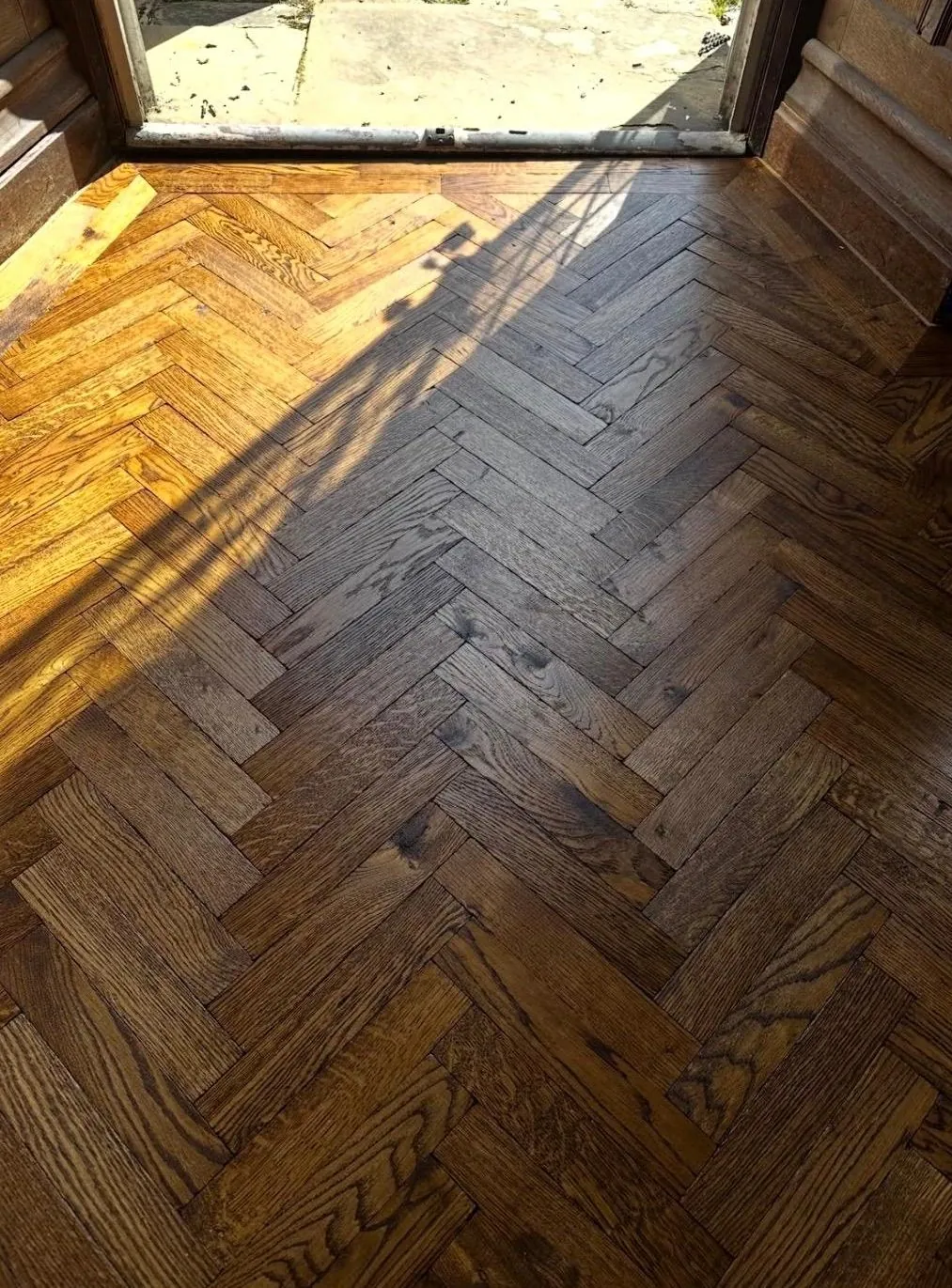
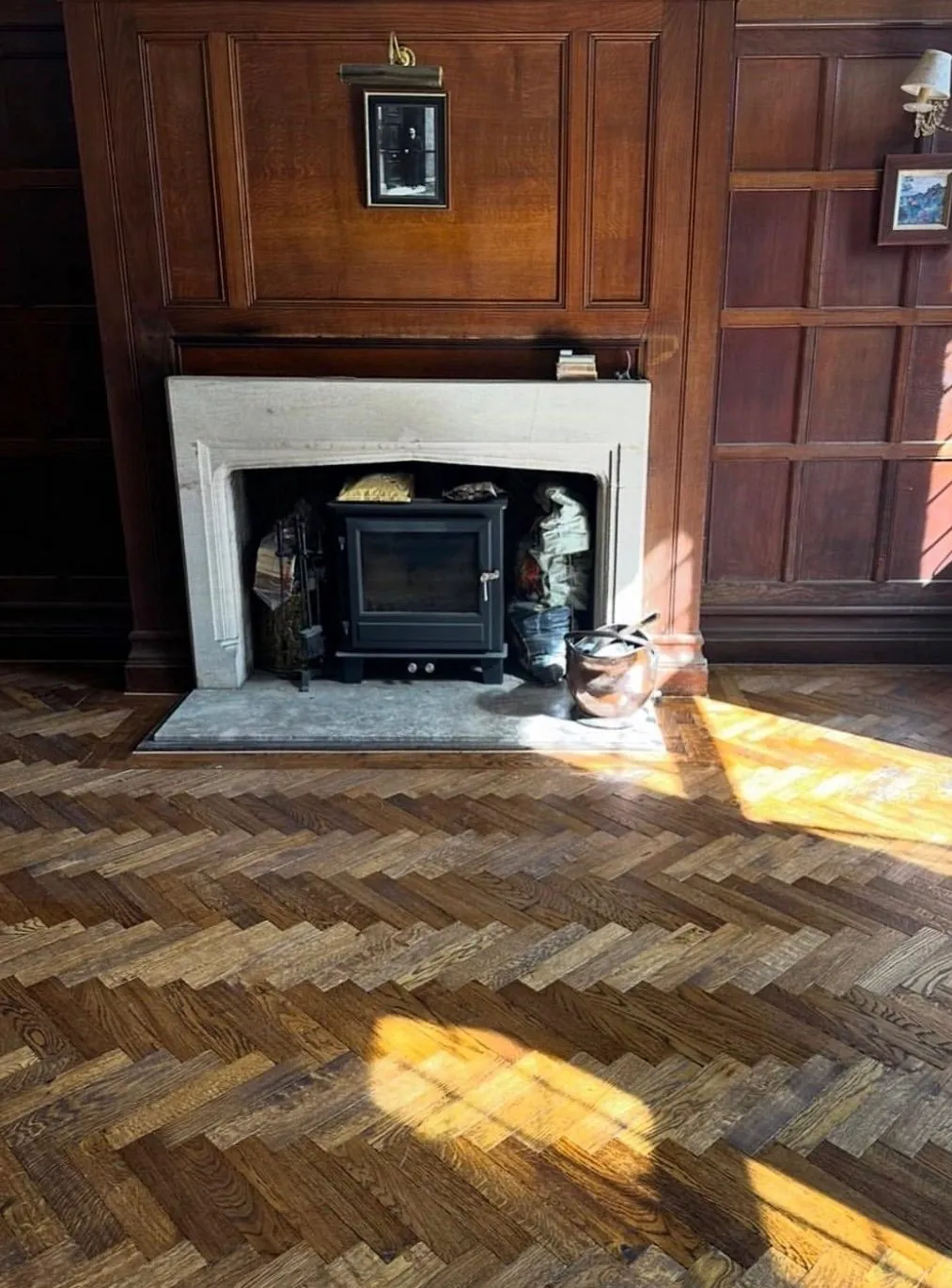
Parquet often needs loose blocks re-fixing and missing blocks replaced before sanding. We've restored solid oak parquet where a dark stain under a rug was removed without lifting the whole floor.
Grinding back problem floors
Where floors have deeper issues, we can take things back further. One customer's floors were ground back to concrete to find a solution, using a mess-free process.
Churches and older buildings
Larger and older floors need extra care. We refurbished a 125-year-old church floor, with attention to detail throughout.
Before we arrive
- Clear the room of small items, ornaments and anything fragile.
- Tell us at the survey about any furniture that needs moving so we can plan for it.
- Let us know about pets, parking and access so the job runs smoothly.
- If you're supplying materials, have them delivered in good time.
- Plan where you'll live and walk while the room is out of use.
Looking after your floor
- Put felt pads under chair and table legs to prevent scratches.
- Use doormats at entrances to catch grit, the biggest cause of wear.
- Wipe up spills promptly rather than letting them sit.
- Clean with products suited to your floor's finish; we'll advise on the day.
- Use rugs in the busiest routes to spread wear over time.
Wood Flooring Restoration near you
We carry out wood flooring restoration for homeowners across these towns: wood flooring restoration in Godalming, wood flooring restoration in Haslemere, wood flooring restoration in Guildford, wood flooring restoration in Cranleigh, wood flooring restoration in Farnham, wood flooring restoration in Petworth, wood flooring restoration in Midhurst, wood flooring restoration in Chiddingfold, wood flooring restoration in Hindhead, wood flooring restoration in Woking and wood flooring restoration in Camberley, plus the villages in between. From Victorian terraces in Guildford to cottages around Petworth and Chiddingfold, we know the homes in this area and the floors they tend to have.
See all areasWood Flooring Restoration
Questions Answered
Something else on your mind? Call Harry on 07748 146291.
Most solid wood and many engineered floors can be restored. It depends on board thickness and damage. Harry will tell you honestly at the free visit.
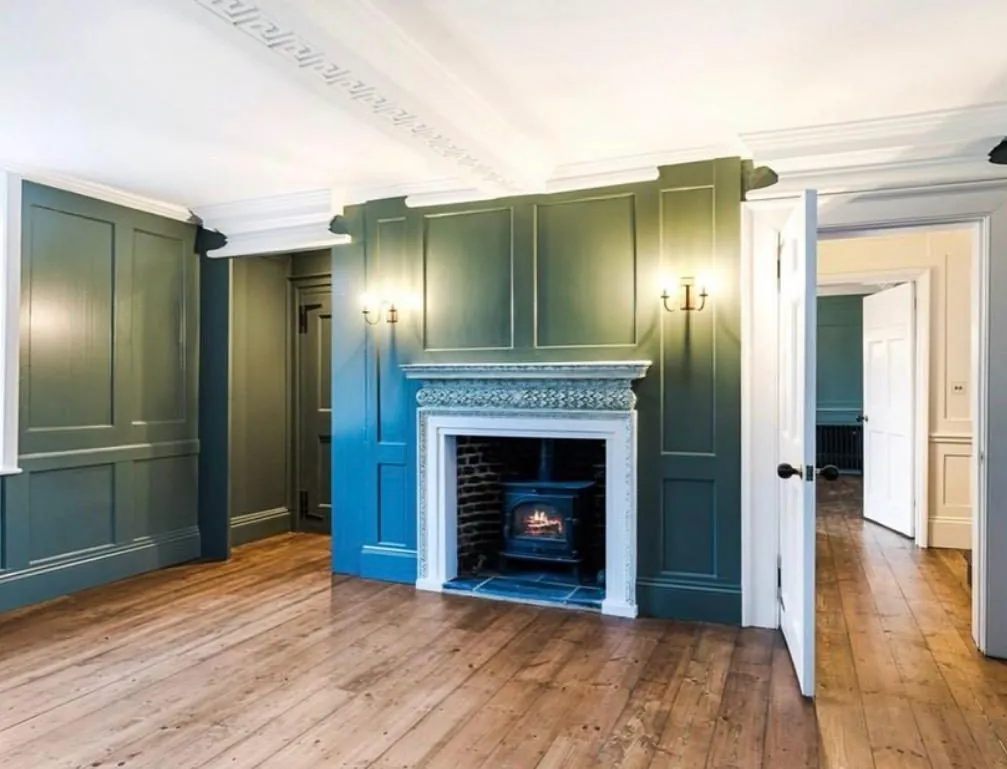
Recent Wood Flooring Restoration
Projects
Bring Your Floor
Back to Life
Free site visit, honest advice and one fixed price for the job. Rated 5.0 on Google and insured to £2.5m.
Back to the homepage or see all services.